Recipe Costing for Restaurants
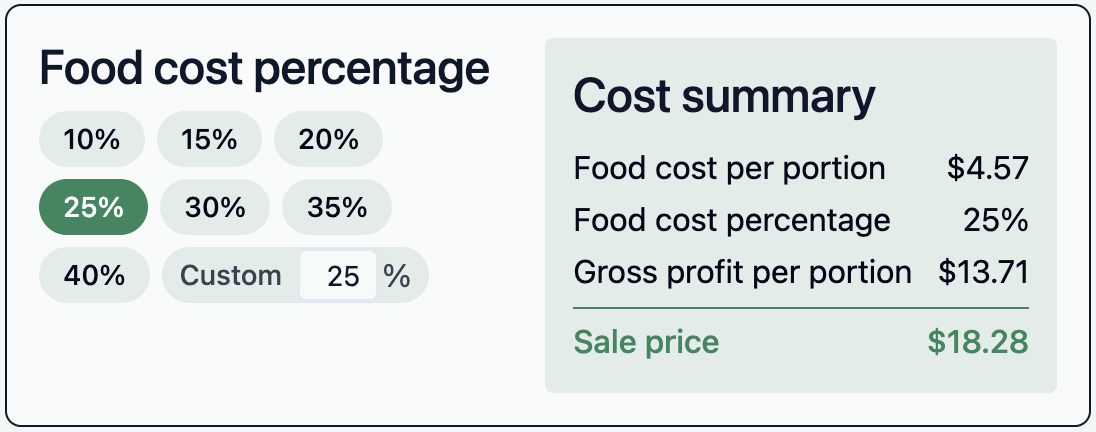
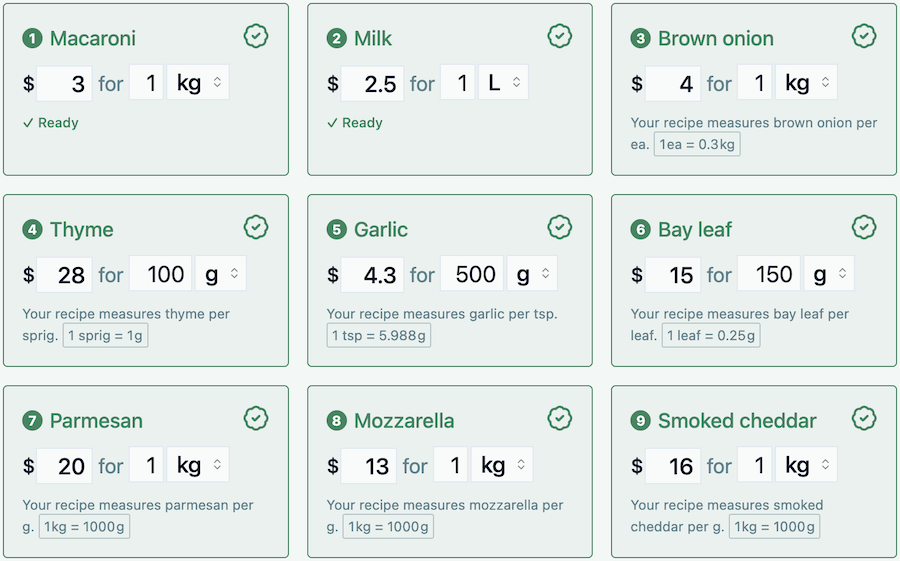
A supplier price rise on olive oil or beef doesn't announce itself. It just quietly eats into a dish's margin until someone notices months later. Soupa costs every dish you cook, shows food cost percentage and sale price next to each one in your list, and recalculates the moment an ingredient price changes. Stocks and sauces you use across several dishes only need building once, as a prep recipe, instead of re-entering the same ingredients every time. It's not a POS or a booking system. It just tells you what a dish actually costs.
Questions restaurant owners ask us
Can I see which dishes are barely making money?
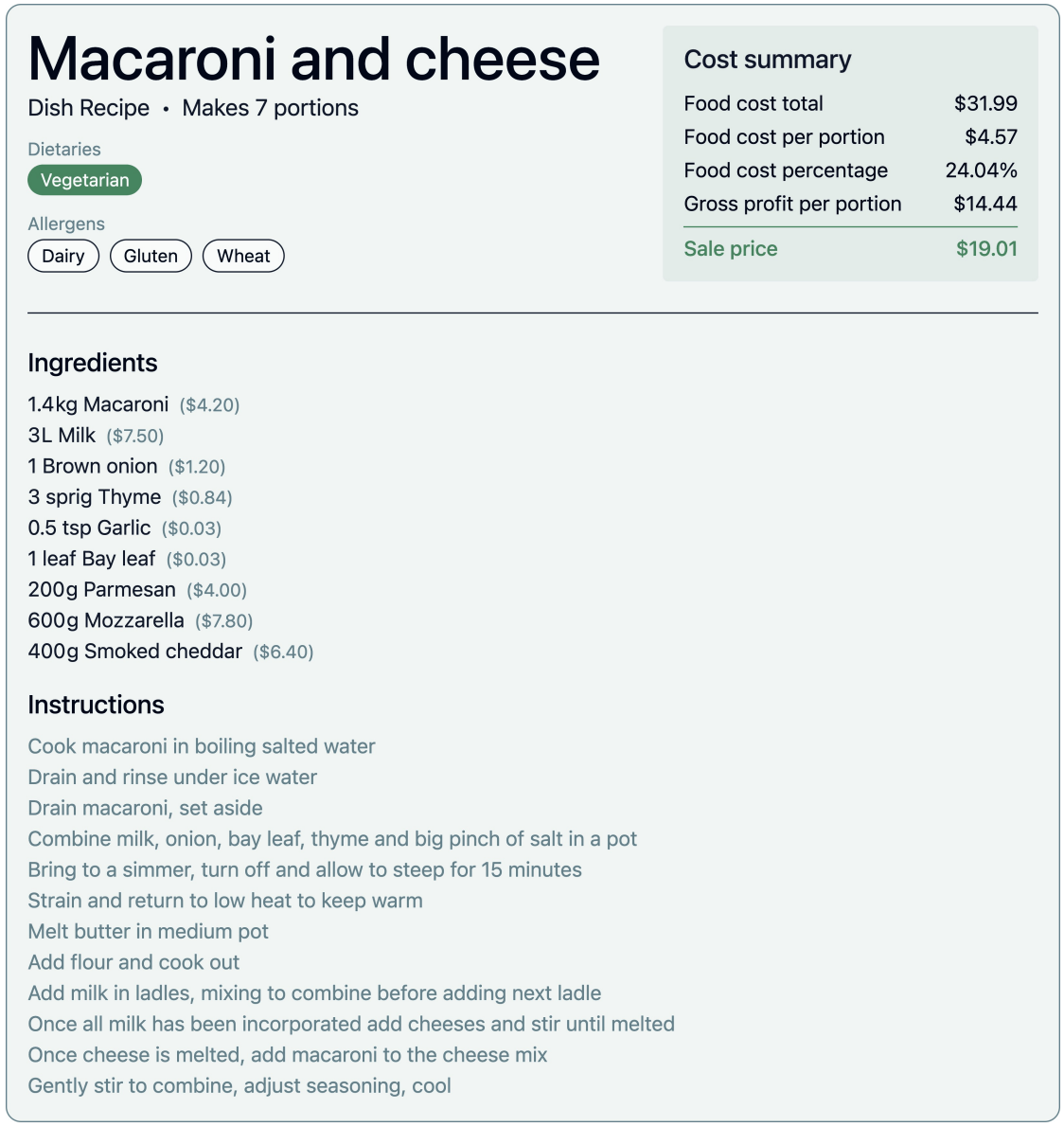
Every recipe in your list shows food cost percentage and sale price together, so a dish that's bleeding margin does not stay hidden in a spreadsheet nobody opens.
Do I have to re-enter my house stock every time I use it in a new dish?
No. Build it once as a prep recipe and link it into as many dishes as you like. Update the stock and every dish using it updates too.
Can I keep allergens attached to a dish?
Yes, allergens and dietary tags live on the recipe itself and print on the recipe card.